Biosafety on the Rise Worldwide: The New Pillar of Healthcare Safety and the Role of Infectious Disease Specialist Giovana Tiezzi in Transforming Care Protocols
Biosafety is no longer a subject restricted to hospital environments. It has become a strategic pillar of global healthcare. The expansion of aesthetic clinics, the rise of minimally invasive procedures, international patient mobility, the global circulation of multidrug resistant microorganisms and the evolution of health regulations have placed biosafety at the centre of international debate. Countries such as Brazil, the United States, the United Kingdom, the United Arab Emirates and South Korea face similar challenges in ensuring safety across services that historically lacked the technical structure of major medical centres.
The impact of this phenomenon extends beyond borders. Across different continents, failures in biosafety have led to preventable infections, adverse events, occupational risks, media scandals and multimillion pound losses for clinical networks, private practices and mid sized healthcare institutions. At the same time, regulatory bodies and health authorities are increasing pressure on services to adopt more rigorous, standardised and sustainable protocols.
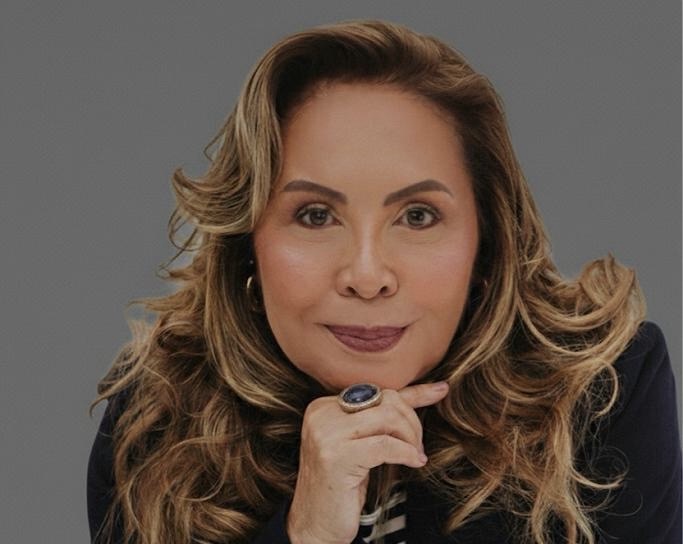
In this context, professionals specialising in infectious diseases, infection control and quality management have moved beyond hospital settings and assumed a strategic role in aesthetic clinics, private practices and outpatient centres worldwide. Among the names emerging in this new frontier, Brazilian infectious disease specialist Giovana Tiezzi, CEO of Tiezzi Health Consultancy, has become a reference for a new generation of international experts who unite science, management and patient safety as inseparable pillars.
With more than five thousand lives impacted by her projects in Brazil, the specialist is gaining international visibility through a consultancy model that applies international standards, interprets national legislation and builds operational workflows that raise safety levels in both public and private institutions.
A Global Challenge That Continues to Advance Slowly
The evolution of global biosafety follows a profound transformation in healthcare consumption. In recent years, aesthetic clinics, private practices and autonomous care spaces have multiplied, driven by demand for fast, personalised and lower cost procedures. This decentralisation, observed across the Americas, Europe and Asia, has brought market benefits but has also expanded a silent vulnerability. The lack of technical standardisation has become a growing threat.
In conversation with our editorial team, Giovana Tiezzi explains that the issue is global.
“There is a widespread misconception that biosafety is exclusive to hospitals. In today’s scenario, any service performing interventions, even the simplest ones, must operate with robust protocols. Risk has changed. Society has changed. And global regulation is becoming increasingly demanding.”
According to her, countries experiencing rapid growth in aesthetic procedures face the same dilemma.
“We have hundreds of services worldwide operating without adequate training, without standardisation and without a risk based mindset. This exposes both patients and professionals. Prevention must become an institutional value, not a document forgotten in a drawer.”
Safety in Practice and Not Only on Paper
The consultancy led by Giovana stands out precisely for transforming protocols into daily practice. Her work includes detailed vulnerability assessments, document review, creation of operational workflows, team training and continuous monitoring.
“Safety cannot exist only on paper. It must function every day and at every stage of care,” she states.
Clinics in both emerging and developed countries have increasingly sought this type of approach, as international standards have become a prerequisite for credibility, certification and commercial expansion.
The Personal Turning Point That Shaped a Global Mission
The physician’s professional journey gained deeper meaning after she herself suffered an infection during an aesthetic procedure.
“I had always lived the theory, but experiencing the impact of a failure firsthand was a turning point. Every statistic represents a life, a story that could have been different. Prevention is more than a protocol. It is an ethical act.”
The episode made her work even more human and expanded her understanding of the responsibility carried by healthcare services. Her mission moved beyond hospital environments to reach private practices, clinics and outpatient facilities that perform direct health interventions.
From Hospital Practice to the Global Stage
Graduated in Medicine from the Universidade do Oeste Paulista, with a residency in Paediatrics, a specialisation in Infectious Diseases at HC FMUSP and three MBAs in biosafety, quality and management, Giovana combines strong scientific and managerial foundations. Her current work encompasses auditing, risk analysis, infection control and health education, with a focus on practical results.
Brazil is experiencing one of the largest expansions of aesthetic clinics worldwide, making the country an epicentre of both challenges and opportunities in biosafety. The presence of specialists like Giovana projects Brazil into international discussions on prevention, quality and the modernisation of healthcare services.
The Global Future of Biosafety
Global trends point towards increasingly strict health regulations, continuous audit services, standardisation of techniques and mandatory certifications for different types of clinics and practices. Experts estimate that in the coming years biosafety will be viewed not only as a technical requirement but as a strategic pillar of institutional credibility.
Giovana summarises this new reality with clarity.
“We are facing a historic shift. Biosafety is not a cost. It is an investment in safety, credibility and institutional longevity. Those who structure themselves now will be prepared for an increasingly demanding global market.”
Conclusion
In a world where healthcare has become decentralised, dynamic and increasingly exposed to invisible risks, the presence of specialists dedicated to biosafety will be decisive in shaping the future of care services. The work of Giovana Tiezzi symbolises a global transition in which prevention, management and responsibility become essential elements of patient safety in any country.