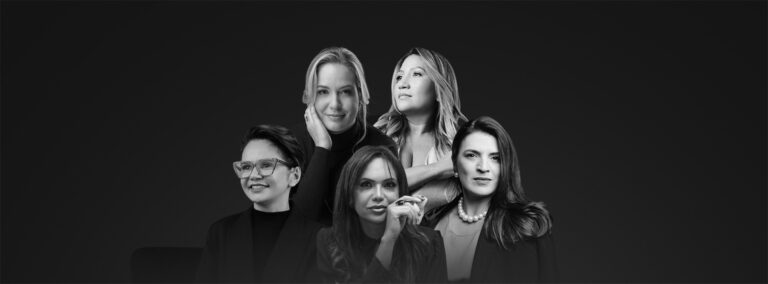

High Performance Without Burnout: Cecília Marcon and the End of the Myth of Success Built on Exhaustion
For decades, the corporate world has valued a model of high performance associated with extreme endurance, long working hours and constant pressure. Success, in this context, has been measured by the ability to withstand emotional and physical overload, often at the expense of mental health, personal identity and the sustainability of results. However, this paradigm is now being questioned in light of growing evidence of burnout, anxiety and leadership instability.

It is within this landscape that specialist Cecília Marcon proposes a conceptual shift. Through her proprietary methodology focused on performance with emotional health, she argues that high level results do not depend on continuous exhaustion, but on strategic clarity, applied emotional intelligence and consistent decision making structures.
According to Marcon, the traditional model ceases to be efficient when performance becomes entirely dependent on uninterrupted effort. When results can only be sustained through overload, loss of boundaries and constant tension, the risk moves beyond the individual and becomes organisational. “This type of performance is structurally fragile. In the medium term, it leads to reactive decisions, declining quality, internal conflict and unstable leadership,” she explains.
One of the central aspects of Marcon’s approach is the early identification of functional exhaustion, which often goes unnoticed. Professionals regarded as successful may continue delivering results while silently experiencing warning signs such as reduced concentration, impulsive decision making, recurring irritability, cognitive rigidity and a loss of connection with purpose. Another critical indicator is the normalisation of extreme fatigue as a standard condition of productivity. “When individuals continue performing but lose clarity, presence and identity beyond their professional role, they are already operating in a state of exhaustion, even without a formal burnout diagnosis,” she notes.
Contrary to common belief, performance with emotional health does not imply slowing down or reducing ambition. Marcon’s methodology is based on a fundamentally different principle. Sustainable results do not require permanent tension, but rather internal structure and clarity in decision making. Her work integrates three essential pillars: strategic clarity, emotional intelligence applied to leadership and structured decision and execution processes.
In practice, professionals develop sharper awareness of priorities, objectives and decision criteria, reducing dispersion and mental overload. Emotional regulation ensures that decisions are not driven by urgency, fear or exhaustion. Meanwhile, structured execution creates consistency, predictability and sustained focus. The outcome is a more precise performance model, with reduced energy waste and significantly improved decision quality.
This perspective aligns with global trends in corporate wellbeing and human centred leadership, increasingly adopted by organisations seeking longevity, innovation and operational stability. For Cecília Marcon, true high performance is defined by its ability to preserve personal identity, sustain long term results and strengthen strategic vision. “Performance with emotional health does not weaken business momentum. It eliminates internal noise, reduces conflict and creates the foundations for success that does not exhaust those who sustain it,” she concludes.